How CISOs Can Use ChatGPT to Strengthen their Enterprise Security
 John Greenwood
Posted On March 20, 2023
John Greenwood
Posted On March 20, 2023
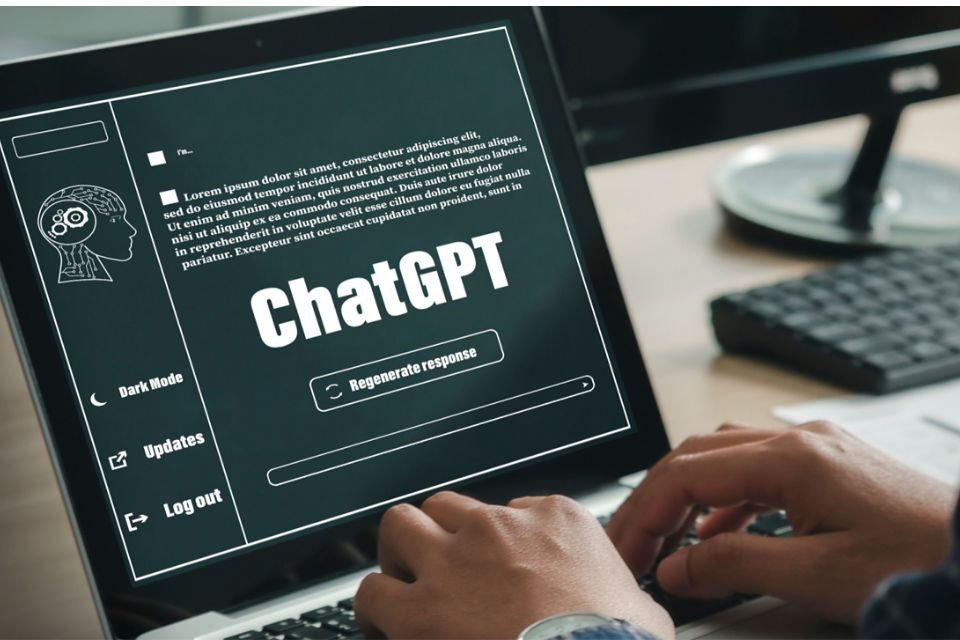
Looking for a way for CISOs to stay ahead of cyber threats? Consider ChatGPT. Hunt for threats, train employees, and more.
As the world becomes increasingly digitized, enterprises face growing security challenges. The proliferation of data breaches and cyber attacks has made it essential for businesses to adopt more sophisticated security measures to protect their assets.
One technology that has the potential to strengthen enterprise security is ChatGPT. In this article, we explore how CISOs can use ChatGPT to enhance their security posture.
ChatGPT can Empower CISOs
Chief Information Security Officers (CISOs) are responsible for overseeing the security of their organization’s digital assets. With the increasing sophistication of cyber threats, CISOs need to be proactive in identifying vulnerabilities and mitigating risks.
One technology that can help CISOs in this task is ChatGPT. ChatGPT is a powerful natural language processing (NLP) tool that can analyze large amounts of data and provide insights that can improve enterprise security.
Understanding ChatGPT
ChatGPT is a machine learning-based language model developed by OpenAI. It is trained on a massive corpus of text data and can generate human-like responses to text input. This capability makes ChatGPT an excellent tool for processing and analyzing large amounts of unstructured data.
ChatGPT can be used to perform a wide range of tasks, including language translation, text summarization, and text generation. Its ability to understand the context and nuances of natural language makes it a valuable tool for enterprises looking to extract insights from large amounts of unstructured data.
How ChatGPT Can Help CISOs
CISOs face a wide range of security challenges, including data breaches, insider threats, and advanced persistent threats (APTs).
To stay ahead of these threats, CISOs need to be proactive in identifying vulnerabilities and mitigating risks. Here are some ways that ChatGPT can help CISOs strengthen their enterprise security.
Threat Intelligence
One of the most significant benefits of ChatGPT is its ability to analyze vast amounts of unstructured data and extract relevant information. CISOs can use ChatGPT to gather threat intelligence from a wide range of sources, including social media, news articles, and dark web forums.
ChatGPT can analyze this data and provide insights into emerging threats, such as new malware variants or attack techniques.
Incident Response
In the event of a security breach, CISOs need to act quickly to contain the incident and minimize the damage. ChatGPT can be used to automate incident response workflows, such as alerting security teams, blocking IP addresses, or quarantining infected machines.
This can help CISOs respond more quickly to security incidents and reduce the impact of a breach.
Employee Training
One of the biggest security vulnerabilities for enterprises is their employees. Human error, such as clicking on a phishing link or using weak passwords, can leave an organization vulnerable to attack. ChatGPT can be used to develop interactive training modules that teach employees about best practices for cybersecurity.
By using ChatGPT to create engaging and interactive training materials, CISOs can help ensure that their employees are more aware of security risks and better equipped to avoid them.
Threat Hunting
ChatGPT can also be used to help CISOs hunt for threats within their enterprise network. By analyzing network logs and other data sources, ChatGPT can identify anomalies that may be indicative of a security threat. This can help CISOs detect and respond to threats more quickly and effectively.
ChatGPT Capabilities Table for CISOs
To summarize, here are some of the security capabilities that ChatGPT can help CISOs with and its efficiency as stars:
| Security Capability | Description | Efficiency Rating |
|---|---|---|
| Threat Intelligence | Analyze unstructured data to detect emerging threats. | ⭐⭐⭐⭐⭐ |
| Incident Response | Automate response workflows to reduce breach impact. | ⭐⭐⭐⭐ |
| Employee Training | Create engaging security training materials for employees. | ⭐⭐⭐⭐ |
| Threat Hunting | Hunt for threats in enterprise network logs and data. | ⭐⭐⭐⭐ |
In conclusion, ChatGPT is a powerful tool that CISOs can use to enhance their enterprise security. Its ability to analyze vast amounts of unstructured data and provide insights can help CISOs identify vulnerabilities and respond more quickly to security threats. By leveraging ChatGPT’s capabilities, CISOs can stay ahead of emerging threats and better protect their organization’s digital assets.
However, it’s important to note that ChatGPT is not a silver bullet solution for all security challenges. CISOs should still adopt a comprehensive security strategy that includes a combination of people, processes, and technology. Nevertheless, ChatGPT can be a valuable addition to an organization’s security arsenal.
As the digital landscape continues to evolve, CISOs will need to stay agile and adaptive in their approach to security.
ChatGPT is just one example of the many emerging technologies that CISOs can use to stay ahead of the ever-changing threat landscape. With the right approach, CISOs can use ChatGPT to enhance their security posture and protect their organization’s digital assets.
Subscribe to our newsletter for daily alerts on cyber events, you can also follow us on Facebook, Linkedin, and Twitter. You can reach out to us via Twitter/ Facebook or mail us at admin@thecybersecuritytimes.com for advertising requests.

You may also like